Intro – Just Sitting Here, Thinking About the Universe
So I was just sitting here this morning, contemplating the nature of the universe. And no—I hadn’t had any cannabis yet. This was a completely clear-headed stream of thought, and I want to share it with you. It started with a question that’s been asked a million times in physics and philosophy:
“What happens at the end of the universe?”
Now, I know the current scientific thinking is that the universe will just keep expanding until it rips itself apart. That’s the “Big Rip” theory—where expansion accelerates so much that even atoms are eventually torn apart. But I don’t think that’s what’s going to happen.
The Vending Machine Universe: Mass as the Driver of Expansion
Here’s how I look at it.
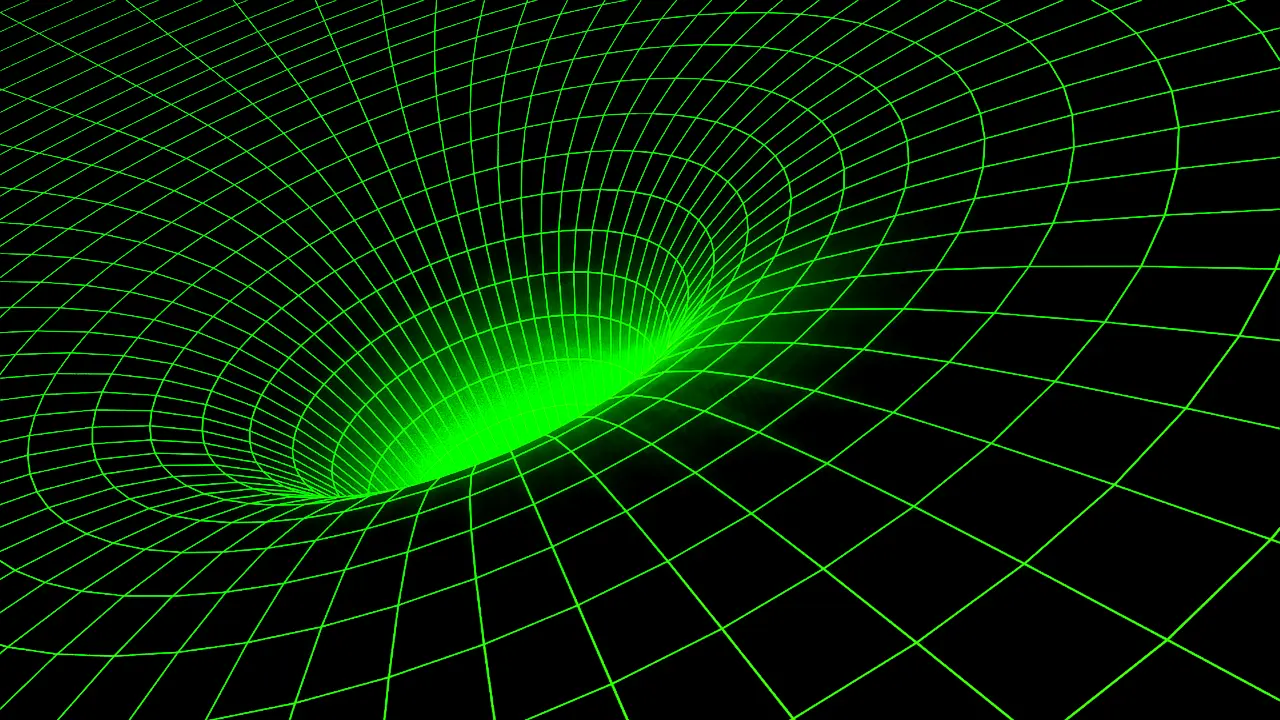
We know that gravity compresses spacetime around massive objects like stars, black holes, and planets. That’s basic general relativity. But here’s the twist—what if all that compression has a net effect on the universe as a whole?
Think of it like vending machines.
A single vending machine in a high-traffic area might earn you between $100 and $500 a month. Not bad, but not enough to live on. But if you had a thousand vending machines—well now we’re talking $100,000 to $500,000 a month. That’s real income.
So maybe one star—or one black hole—compressing spacetime isn’t enough to impact the whole universe. But imagine billions, trillions, quadrillions of massive objects, all denting spacetime. Just like those vending machines, the small effects add up.
And all that compression pushes spacetime outward in the untouched areas—causing expansion.
So the more stars form, the more mass we get, and the more pressure builds on spacetime—causing the universe to stretch outward. That’s the “Crunch-Stretch” model. Mass compresses, voids expand.
Peak Expansion: The Age of Black Holes
Eventually, stars die and galaxies spiral into their central black holes. Over a ridiculous span of time, everything falls into black holes—matter, light, even the galactic remnants.
At that point, the universe is full of black holes. No more star formation, just gravity wells everywhere. According to my thinking, that’s when spacetime is under maximum pressure. The expansion of the universe hits its highest rate.
But it doesn’t stop there.
Enter Hawking Radiation: The Evaporation Era
As Stephen Hawking proposed, black holes aren’t permanent. They evaporate over time, leaking energy as Hawking radiation. And since black holes will be the last things left, the final age of the universe will be cold, dark, and full of this ultra-low-energy radiation.
Eventually, even the black holes disappear. And now we’ve got this weird situation: no more stars, no more black holes, no more mass—just a quiet soup of Hawking radiation floating through the void.
With no more mass to compress spacetime, there’s no more push for expansion.
The universe becomes static.
The Self-Assembly of Nothing
Now here’s where it gets real speculative—and really interesting.
What happens when particles are just floating around in empty space for eons upon eons?
They self-organize.
We’ve seen this kind of thing in the early universe, in particle physics, in entropy studies. Given enough time, even in a low-energy state, particles can bump into each other, clump together, and eventually collapse under their own gravity.
That means Hawking radiation could, over quadrillions of eons, reassemble into a dense, massive object.
A new supermassive Hawking core, compressed tighter than anything we’ve ever seen.
Collapse & Rebirth
Once this object forms, its gravity starts pulling the rest of spacetime inward – the universe begins to collapse.
Everything—all the radiation, energy, and information—falls inward toward this new core. Eventually, the universe crunches into a single, unimaginably dense point.
And just like a supernova—but on the scale of everything—it explodes.
Not a Big Bang, but a Super Bang. The universe is born again.
🔁 Cosmic Vending Machines & Infinite Cycles
Let’s wrap this up and bring it full circle.
My theory is this:
- Mass compresses spacetime locally.
- The cumulative compression creates pressure against spacetime universally.
- That pressure causes the universe to expand.
- Over time, all matter falls into black holes.
- Black holes evaporate into Hawking radiation.
- Hawking radiation self-organizes and collapses.
- The universe collapses with it.
- BOOM—new universe.
It’s a cycle. A Crunch-Stretch-Collapse-Rebirth model.
It’s like running a cosmic vending machine business. Each little bit adds up. One machine doesn’t change the game, but a thousand? That’s a universe-changer.
📚 Scientists Who Might Be on the Same Page
I’m not a physicist. I’m just a guy with a weird brain and a lot of time to think. But it turns out, some real scientists are walking near the path I’ve stumbled onto:
🔁 Roger Penrose – Conformal Cyclic Cosmology
Believes the universe goes through infinite cycles or “aeons,” each ending in black hole evaporation and starting fresh.
🧨 Paul Steinhardt & Neil Turok – Ekpyrotic Models
Theorize that our universe expands and contracts over and over in cycles, avoiding singularities and maybe dark energy.
🕳️ Nikodem Popławski – Black Hole Cosmology
Proposes the universe may exist inside a black hole—and that black holes could birth new universes.
🌫️ Heino Falcke
Explores how everything—including black holes—eventually evaporates, leaving behind nothing but radiation.
🔬 Claudia de Rham
Works on “massive gravity” theories that question whether dark energy is even needed to explain the universe’s expansion.
🎤 Final Thoughts
This might all be completely wrong. Or maybe it’s right in a way that hasn’t been discovered yet. But either way, I think it’s worth thinking about. Because this is how ideas start—not with perfect grammar or equations, but with weird voices in your head saying:
“Hey, what if gravity is the reason the universe is expanding?”
That’s all this is. Just me talking it out, seeing what sticks. But if it made you think, then maybe you’re on this ride with me.
Thanks for reading, space brain.
✨ Metaphysical Musings – Is Hawking Radiation… God?
So here’s a little something I’ve been chewing on as I wrap this all up.
If Hawking radiation is the final state of the universe—the lowest entropic level, the quiet hum after everything else is gone…
Is that God?
Think about it.
If Hawking radiation is all that remains…
And if it eventually self-assembles, collapses, and creates a new universe…
Then yeah. That sounds an awful lot like something divine. The ultimate creative force. A cosmic phoenix rising from its own ash, again and again, forever.
And here’s another trippy thought:
What if scientists were able to create Hawking radiation in a lab?
What would we discover about it that we don’t already know? Could we unlock the secrets of universal rebirth? Could we accidentally spark a new cosmos?
I don’t have the answers. But maybe you do.
What do you think? Let me know in the comments.
Let’s get weird, let’s get curious, and let’s keep wondering.
—Jim ☄️
Xucaen in Space Brain
Leave a Reply